Quick answer
Read the care label first, because some weighted blankets are spot clean only. If it is machine washable and your washer can take the weight (Tide says over 20 pounds goes to a laundromat, Casper says over 25), wash it alone on a gentle cycle in cold water with a mild detergent and an extra rinse. No bleach, no fabric softener. Dry it on low heat or flat in the air, and make sure it is completely dry before it goes back on the bed.
A weighted blanket is not like other bedding. The weight comes from filling sewn into small pockets, and that filling is what a careless wash can break, clump or leave soggy. The good news is that most blankets can be cleaned at home once you know three things: what is inside, how much it weighs, and what the label says. This guide covers all three, then walks through machine washing, hand washing and drying.
Step 1: read the care label
Every maker says the same thing first. Casper says the most important step is to check the care label, which tells you whether the blanket is machine washable, the best water temperature and how to dry it safely. Tide calls the label your first indicator, and says to look on the manufacturer's website if it is missing.
Labels differ more than you would expect. Casper says its own Weighted Blanket is spot clean only. Bearaby says its Cotton Napper, Travel Napper, Tree Napper and children's Nappling are machine washable, while the Velvet Napper and the 20-pound Queen blanket should be dry cleaned. If your label and this guide disagree, the label wins.
Step 2: know what is inside
- Pellets, steel shot, smooth pebbles and micro glass beads: Tide says these fillings are generally washable.
- Sand, corn, beans or rice: Tide says blankets with these fillings shouldn't be washed. Casper says natural fillings don't always react well to moisture and suggests hand washing and spot treating.
- Glass beads and pellets, machine or hand? The two guides differ. Casper says that if the tag allows machine washing, glass bead or plastic pellet blankets can go in on cold and gentle with an extra rinse. Tide says glass beads, smooth pebbles and steel shot only need hand washing. When the guides disagree, follow your own tag, and hand wash if the tag is unclear.
Step 3: check the weight
Weight decides whether your home washer can do the job.
- Tide says blankets over 20 pounds should go to a laundromat for professional washing.
- Casper says that over 25 pounds a household washer is most likely too small, and that under 25 pounds you can use your regular machine.
- Bearaby points out that a weighted blanket gets heavier when it is wet, so check the weight capacity of both your washer and your dryer before you start.
- Bearaby also says top-loading machines with an agitator can tear at the blanket's fabric, so use a front-loader or a laundromat's heavy-duty machine where you can.
If you are not sure, a laundromat is cheaper than a broken washer or a ruined blanket.
What you need
- A mild liquid detergent without bleach or chlorine
- A soft toothbrush or soft brush for stains
- A large tub or clean bathtub, if you are hand washing
- A clean, flat surface or a drying rack with room to spread the blanket out, for air drying
- A towel or two to blot water
Step 4: spot treat stains first
Tide's method is to cover each stain with a small amount of liquid detergent and let it sit for about 5 minutes. Casper adds two options: for a small stain, scrub gently with an old rag or toothbrush and warm water with gentle detergent, and for a large, fresh stain, presoak in detergent and cold water for about 45 minutes. Rinse a new stain with cold water as soon as you see it, because Casper warns that hot water can set it in.
Step 5a: machine wash (if the label allows it)
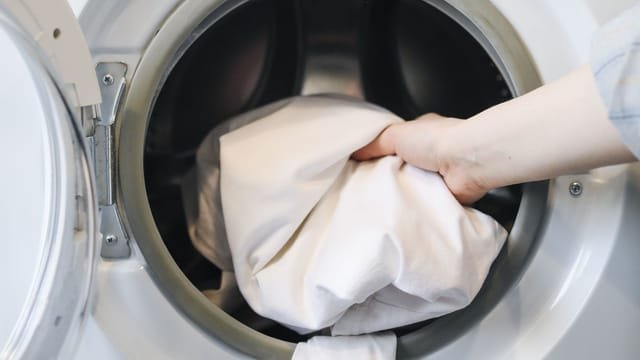
- Wash it alone. Both Tide and Casper say to wash the blanket by itself, spread evenly in the drum, so the filling stays distributed and the machine can handle the weight. Bearaby says the same.
- Pick a gentle cycle. Casper warns that aggressive spin cycles can damage a blanket. Bearaby suggests the delicate or permanent-press cycle.
- Use cold water. Tide recommends cold. Casper says cold or warm only and never hot.
- Use a mild detergent. Casper says to avoid bleach, chlorine and harsh chemicals, which break down fabric and leave build-up.
- Skip fabric softener. Casper says it can make the blanket scratchy or stiff and can clump the filling together.
- Add an extra rinse. Casper recommends one to remove detergent residue from the filling pockets.
Step 5b: hand wash (glass beads, sand, corn, and any blanket marked hand wash)
- Fill a large sink, basin or clean tub with cold water and a little laundry detergent.
- Fully submerge the blanket and let it soak. Tide says 10 to 60 minutes.
- Scrub the surface gently with a soft brush, working on any stained areas.
- Drain and rinse with cold water until the water runs clear, as Tide advises.
- Squeeze or press the water out with towels, then move to the drying step below. A wet weighted blanket is very heavy, so lift it in sections or ask someone to help you carry it.
If you are hand washing a blanket with sand, corn or bean filling, spot clean only the stained areas and avoid soaking the whole blanket, since Casper says natural fillings don't react well to moisture.
Step 6: dry it safely
This is where heavy blankets go wrong. The blanket holds water in its filling pockets for a long time, and heat can damage some fillings.
- Air dry flat (the safest option). Casper says air drying is the safest way and the best choice for blankets with metal beads or chains. Lay it flat so the filling stays spread across the whole blanket and doesn't slide to one side. Tide says to turn it every few hours, and that drying can take 24 to 48 hours.
- Tumble dry on low heat. Casper says most weighted blankets tolerate it, and Tide says to stop now and then and fluff the blanket so it dries evenly. Dry it alone, never use high heat, and expect it to need more than one cycle. Bearaby says its knit Nappers may need two.
- Check the dryer. Heat can damage beads, and Tide says to avoid tumble dryers, especially at high heat, for the hand wash fillings. Make sure the dryer can take the weight too. If it struggles, our guide to cleaning a dryer explains the lint and vent problems that slow drying down.
Do not hang a knit blanket to dry. Bearaby says hanging stretches the loops, and for knit Nappers it recommends a low-heat tumble dry instead of laying them flat. When the blanket feels dry, press into several pockets with your hand. Any cool or heavy spot means more drying time, because damp filling can turn musty. The same rule applies to washing and drying pillows.
Washing by fabric
Casper lists specific advice for the cover fabric, which still applies when the filling allows machine washing.
- Cotton: cold water, regular cycle. A cup of vinegar or salt in the first wash can help stop colors from bleeding.
- Fleece: wash alone or with other fleece, in warm water on a regular cycle. Fleece is the one fabric where Casper says fabric softener is fine.
- Minky (polyester blend): cold water, gentle cycle, wash alone, and avoid hot water and high heat.
- Flannel: cold or warm water with a gentle detergent, tumble dry on low, and take it out right away, because sitting in the heat can overdry the fibers.
- Linen blends: most can use cold water on a regular cycle, but rayon-linen blends are better hand washed or dry cleaned because they can shrink or bleed.
Mistakes that ruin a weighted blanket
- Using bleach. Tide and Bearaby both say never to use it.
- Using fabric softener. It can clump the filling and leave the blanket stiff.
- Using hot water or high heat. Casper says never to use hot water and warns that heat can ruin the beads.
- Ironing. Casper says ironing can melt the filler and the inner blanket.
- Washing it with other laundry. Wash alone, as Tide, Casper and Bearaby all advise.
- Overloading a small or top-load washer. The weight, plus the water, can strain the machine and tear the fabric.
- Putting it away damp. Always dry completely.
Keep it clean longer
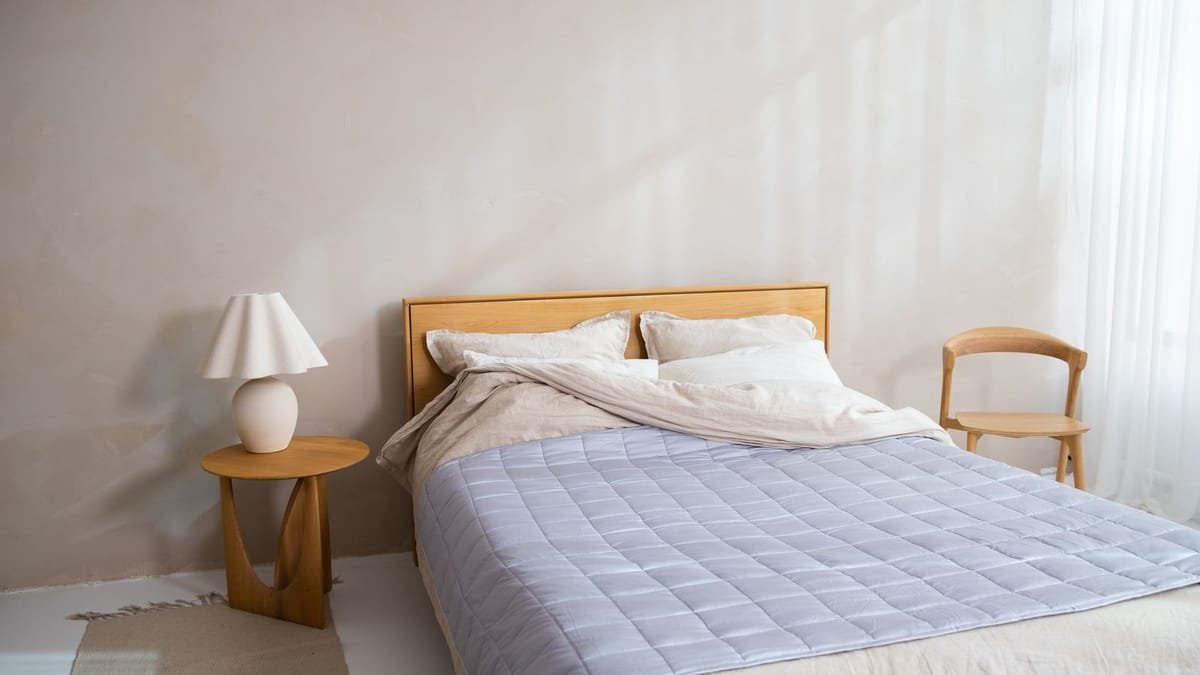
The easiest way to wash a weighted blanket less often is to give it something to protect it. A removable duvet cover takes the sweat and skin oils and goes in a normal wash with your sheets. None of the three manufacturers gives a fixed washing schedule, so wash the blanket itself when it is stained, smells, or the label says it is time. Spot clean small spills right away.
While the cover is in the wash, it is a good moment to refresh the rest of the bed. Our guide to cleaning a mattress covers the other half, and the laundry room organization guide helps you set up space for big bedding days.
When to use a laundromat or a professional
- Your blanket is over 20 pounds (Tide) or 25 pounds (Casper).
- Your machine is a top-loader with an agitator, which Bearaby says can tear at the blanket.
- The label says dry clean only, as Bearaby does for its Velvet Napper and 20-pound Queen blanket.
- The blanket has a delicate cover or an unusual filling and you are unsure.
Bearaby suggests using a mild detergent at the laundromat, washing separately in cold water on delicate or permanent-press, and tumble drying on low.
Sources
- Tide, How to wash a weighted blanket
- Casper, How to Wash a Weighted Blanket: Your Care Guide
- Bearaby, How to wash a weighted blanket
Frequently asked questions
Can you put a weighted blanket in the washing machine?
Often yes, but the care label decides. Casper says most weighted blankets are washable and that blankets under 25 pounds can go in a regular home washer, while Tide recommends a laundromat for blankets over 20 pounds. Wash it alone on a gentle cycle in cold water with a mild detergent. Some blankets, such as the Casper Weighted Blanket, are spot clean only.
How do you wash a weighted blanket with glass beads?
Follow the care tag. If it says machine washable, Casper recommends cold water, a gentle cycle, mild detergent and an extra rinse, washed alone. Tide says blankets filled with glass beads, smooth pebbles or steel shot only need hand washing: soak in cold water and detergent for 10 to 60 minutes, scrub gently with a soft brush, rinse until the water runs clear and air dry flat.
Can you put a weighted blanket in the dryer?
Casper says most weighted blankets tolerate a low-heat tumble dry, though air drying flat is safer and extends the blanket's life. Tide suggests tumbling on low and stopping to fluff, or air drying flat and turning it every few hours, which can take 24 to 48 hours. Never use high heat, which can damage the filling.
How often should I wash a weighted blanket?
None of the manufacturer guides gives a fixed schedule. Because heavy blankets are awkward to wash and dry, the practical approach is to use a washable duvet cover, wash that as often as your bedding, and wash the blanket itself when it is stained, smells, or the label says it is due.
Can I use bleach or fabric softener on a weighted blanket?
Avoid both. Tide and Bearaby say never to use bleach, and Casper says to use a gentle detergent without bleach or chlorine. Casper also warns that fabric softener can make the blanket scratchy or stiff and can clump the filling.
What if my weighted blanket is too heavy for my washer?
Take it to a laundromat with a large commercial machine. Tide says blankets over 20 pounds should go to a laundromat, Casper puts the line at 25 pounds, and Bearaby notes that a blanket gets heavier when wet and that top-loaders with agitators can tear at the fabric.
This site may earn a commission from products linked here, at no extra cost to you.