Quick answer
Split the kitchen into zones (prep, cook, clean, serve, store), keep each tool where you use it, clear the counters down to the daily essentials, put pantry food in see-through containers with new items behind old, and keep the fridge at or below 40°F with covered containers. Finish each day with a five-minute reset.
A kitchen collects more stuff than any other room: gadgets from gift sets, three of the same spatula, a drawer of takeout menus, bags of grains with no lids. It also gets used several times a day, so mess builds fast and it's easy to give up. The fix isn't more containers. It's deciding where each category belongs, based on how you cook, and being strict about what earns space on the counter.
Think in zones, not cabinets
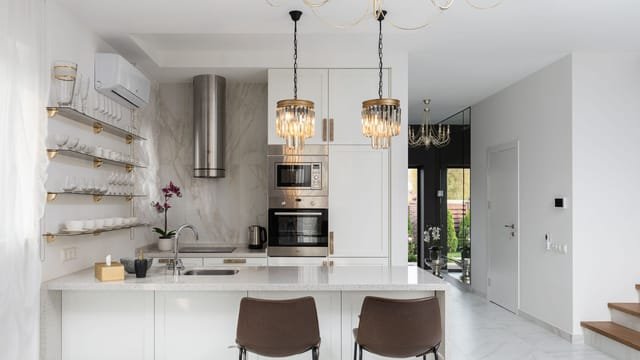
The classic way to organize a kitchen is by zone: group items by the task they're used for, and put them next to where that task happens. Walk through your last dinner in your head and notice where you reached for things.
- Prep zone (near the main counter space): knives, cutting boards, mixing bowls, measuring cups, peelers.
- Cook zone (around the stove): pots, pans, spatulas, oils, salt, pepper and the spices you use most.
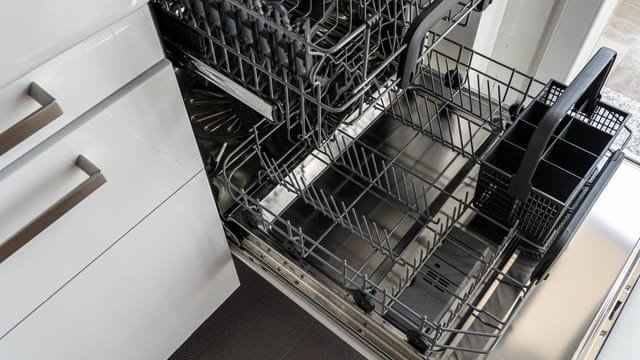
- Clean zone (around the sink and dishwasher): dish soap, sponges, dish towels, trash and recycling, and the cleaning supplies.
- Serve zone (near the table or dishwasher): plates, glasses, cutlery, serving dishes.
- Store zone (pantry and fridge): food, containers, lids, and bulk items.
If you find yourself carrying a pan across the room to get the oil, that's a zone problem, not a storage problem. Move the oil.
Clear the counters first
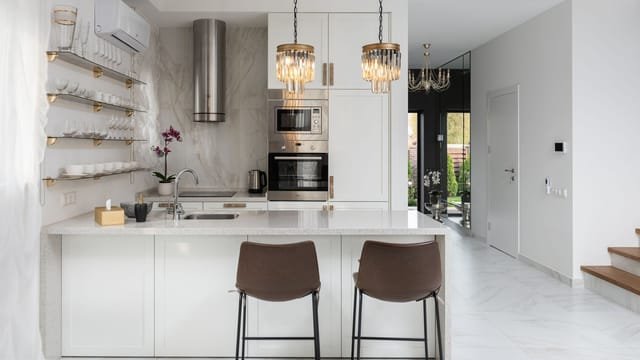
Clear counters make a kitchen feel organized and make cleaning faster, so start there. Take everything off, wipe the surface, and put back only what you use every single day, usually a coffee maker, a knife block or a few utensils in a crock, a dish rack if you need one, and maybe a fruit bowl.
- Everything you use weekly, but not daily, moves into a cabinet or drawer that's easy to reach.
- Everything you use a few times a year (the stand mixer, the waffle maker, the pressure cooker) goes on a high shelf or in a closet outside the kitchen.
- Everything you don't remember using goes into the donate box.
Use a tray or a cutting board to group small things such as oil, salt and pepper by the stove. A tray turns a cluster of bottles into an intentional arrangement and makes wiping the counter one move instead of six.
Drawers: dividers, depth and "most used at the front"
Drawers become junk drawers when nothing has a defined slot. Empty one drawer at a time and sort what's inside into categories before putting anything back.
- Use dividers or trays. Adjustable bamboo or plastic trays keep cutlery, cooking tools and gadgets apart so each has a fixed place.
- Put drawers where the task is. Cooking utensils live in the drawer closest to the stove, and cutlery near the dishwasher or table, so putting away takes a step instead of a walk.
- Edit duplicates. Most kitchens need one or two of most tools. Keep the best and let the rest go.
- Keep sharp knives safe. Use a knife block, a magnetic strip or an in-drawer knife tray with slots, never loose in a drawer where a hand can reach in blind.
- Make a small "miscellaneous" drawer on purpose. Batteries, tape, scissors and takeout menus need somewhere to be. Giving them one drawer keeps them from spreading.
The pantry: see it, reach it, rotate it
A pantry works when you can see everything at a glance and reach it without moving something else first. That's true for a walk-in pantry and for one cabinet.
- Group by category. Baking, breakfast, snacks, canned goods, pasta and grains, oils and sauces. Each group gets a shelf or a bin.
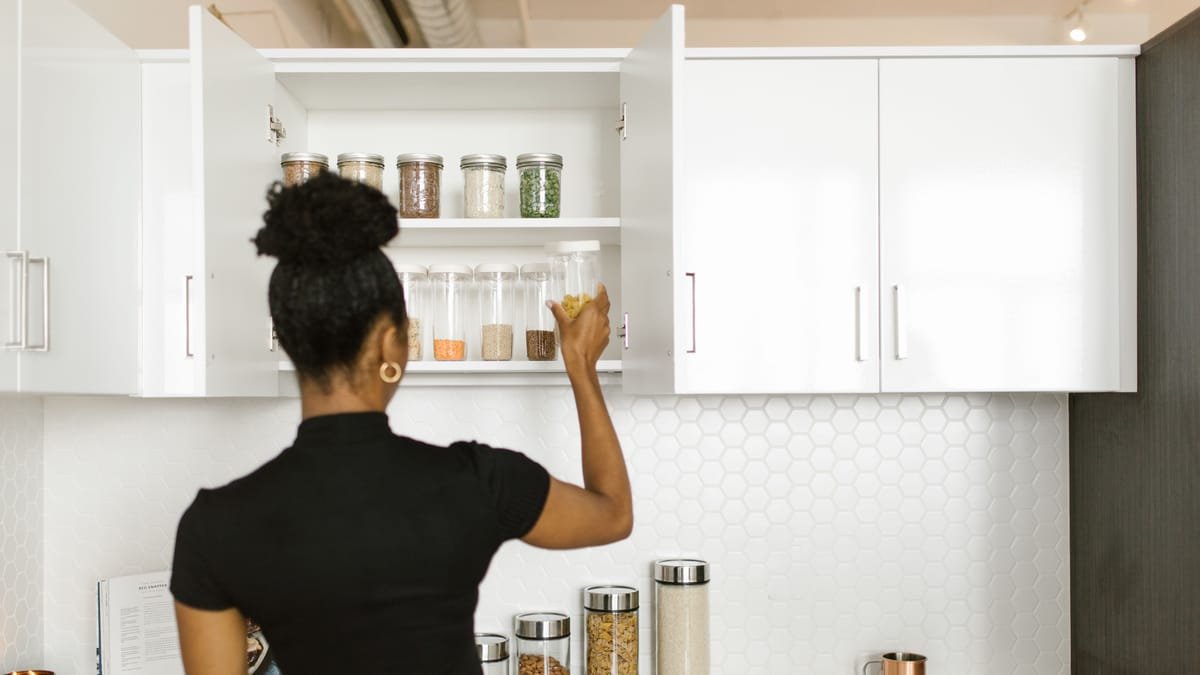
- Use clear containers for open dry goods. Flour, rice, pasta, cereal and sugar in see-through, airtight containers show you what's left, take less space than bulky packaging and stack neatly.
- Label the containers with the contents and, if you like, the date you filled them or the date on the package.
- Put new items behind older ones. This first-in, first-out habit keeps the oldest food in front so it gets used first.
- Keep food away from cleaning products. The FDA advises not to store non-perishable foods near household cleaning products and chemicals, so give them separate shelves or a separate cabinet.
- Use risers and lazy Susans. A tiered shelf riser makes the back row of cans visible, and a turntable makes corner shelves and oils easy to reach.
Check canned goods when you restock. The FDA says to look for damage such as swelling, leaks or deep rust and not to use cans that show it.
The fridge and freezer
A tidy fridge helps you waste less food and keeps it safer. The FDA recommends keeping the refrigerator at or below 40°F (4°C) and the freezer at 0°F (-18°C), and says an appliance thermometer is the best way to know, with one in each, checked at least once a week.
- Use covered containers or sealed bags for refrigerated food, and tight containers for freezer leftovers.
- Keep raw foods separate from ready-to-eat foods. A practical way to do this is to keep raw meat on a lower shelf in a tray or container, so any drips can't reach other food.
- Store eggs in their carton on a shelf, not in the door, as the FDA recommends.
- Make a "use first" bin. One bin at eye level for leftovers and items close to their date means you'll see them before they go bad.
- Label and date leftovers and freezer meals with painter's tape and a marker, so you don't guess later.
- Clean as you go. Wipe a shelf each week when you take food out, and do a full clear-out before the big shop.
It helps to know that a "use by" date on most foods is the manufacturer's quality recommendation, and the FDA notes it is not a food safety date. The exception is infant formula and some baby foods, which must be used by the date on the package.
Spices, oils and everyday cooking supplies
Spices are the classic kitchen mess. Pick one system and stick to it.
- Drawer insert: store jars lying flat or at an angle, with labels on top, in a shallow drawer near the stove.
- Cabinet riser or tiered rack: lets you see the back row without moving the front.
- Door-mounted rack: uses the inside of a cabinet door for small jars.
- Alphabetize or group by cuisine. Either works, as long as it matches how you search.
Keep spices away from the heat of the stove and the steam of the kettle, which wears out flavor faster. Store oils and vinegars in a cool, dark cabinet nearby, with a tray under the bottles you use most.
Under the sink and in the cabinets
Under-the-sink space is awkward but valuable. A two-tier pull-out or stackable bins make the most of the height around the pipes, and a small caddy lets you carry cleaning supplies to the spot instead of digging. For the rest of the cabinets, zone by task and keep heavy items low. Our guide to organizing kitchen cabinets goes through every cabinet type, corner by corner.
Small kitchens and no-drill options for renters
- Use the walls you can: an adhesive or tension-mounted rail holds utensils and mugs, and the inside of cabinet doors holds lids, foil and cutting boards.
- Add a rolling cart for overflow pantry items, small appliances or a coffee station. It moves out of the way when you need floor space.
- Stack with risers: a shelf riser in a cabinet turns one level into two.
- Hang what you can: over-the-door hooks and over-the-cabinet racks need no tools.
- Choose multi-use pieces: a cutting board that fits over the sink adds counter space, and a stackable set of containers saves a whole shelf.
- Move what's seasonal out: holiday platters and the big roasting pan can live in a closet or under the bed.
Budget ideas vs. worth splurging on
- Budget: a tray for the counter, dollar-store baskets, mason jars, painter's tape for labels, a shoe organizer on the pantry door, a tension rod under the sink for spray bottles.
- Worth it: drawer dividers that fit your drawers, matching airtight dry-food containers, a lazy Susan for the corner, a good knife block or magnetic strip, and an appliance thermometer for the fridge.
The five-minute kitchen reset
- Load or wash the dishes and wipe the sink.
- Wipe the counters and the stove top.
- Put every tool, bottle and container back in its zone.
- Check the fridge for leftovers and move anything to the "use first" bin.
- Take out the trash if it's full, and set out what you'll need for tomorrow's coffee or lunch.
Once a month, take ten minutes to check the pantry and fridge for expired or forgotten items and refill the containers that are running low.
Sources
Frequently asked questions
How do I organize a small kitchen with little storage?
Go vertical and clear the counters. Use wall rails or shelves for utensils and mugs, stack-and-slide organizers inside cabinets, a rolling cart for pantry overflow, and store small appliances you rarely use out of the kitchen. Keep only the daily essentials on the counter.
What is the best way to organize kitchen drawers?
Use dividers or trays so each category has a fixed slot, and store items by where you use them: cooking utensils near the stove, cutlery near the dishwasher or table. Empty the drawer first, toss duplicates and broken tools, and keep the most-used items at the front.
How should I organize the refrigerator?
Keep it at or below 40°F (4°C) and check it with an appliance thermometer, as the FDA recommends. Store food in covered containers, keep raw foods separate from ready-to-eat foods, and put eggs in their carton on a shelf rather than in the door.
How do I keep pantry items from expiring unnoticed?
Put new items behind older ones, keep like items together, and check the shelves on a set day each month. A use-by date on most foods is the manufacturer's quality recommendation, not a food safety date, according to the FDA, with the exception of infant formula and some baby foods.
How often should I reorganize my kitchen?
A five-minute reset after dinner each day and a quick pantry and fridge check once a month keeps most kitchens under control. Do a full declutter once or twice a year, when your habits or household change.
This site may earn a commission from products linked here, at no extra cost to you.