Quick answer
Pull out the bottom rack and rinse the filter under running water without scrubbing hard, wash the spray arms and clear the jets with a soft brush, wipe the door edges and dispenser, then run an empty hot cycle with white vinegar (or citric acid if vinegar doesn't help). Check your manual for the exact steps for your model, and never mix cleaning products.
A dishwasher looks clean on the inside because it is always full of hot water and soap, so most people never think to clean it. But every load sends food scraps toward the filter, and every cycle leaves a little residue on the walls, the door and the spray arms. Over time that shows up as a bad smell, a gritty film on glasses, or dishes that come out dirtier than they went in. The fix takes about twenty minutes and a few household items.
Signs your dishwasher needs cleaning
- A sour or musty smell when you open the door
- Gritty residue or food particles on dishes and glasses
- Cloudy glasses or a white film that doesn't wipe off
- Standing water or slow draining at the bottom after a cycle
- Dishes that need re-washing even though you loaded them correctly
Samsung notes that cleaning the dishwasher improves most of its cleaning performance, so it is worth checking the machine before you blame the detergent.
What you need
- White vinegar, or citric acid crystals
- A soft brush or an old toothbrush
- A toothpick for clogged jets
- A damp microfiber cloth and a dry one
- Warm water and a little dish soap
- A small bowl or a measuring cup that is safe to run in the dishwasher
How often to clean each part
- Every week: scrape plates before loading and wipe the door edge and seal.
- Every month: check and rinse the filter. LG gives no fixed schedule, but says regular filter cleaning improves washing performance.
- Every few months: wash the spray arms and clear the jets, and run the empty vinegar or citric acid cycle.
- Right away: any time there's a smell, gritty dishes or standing water.
Step 1: empty it and remove visible debris
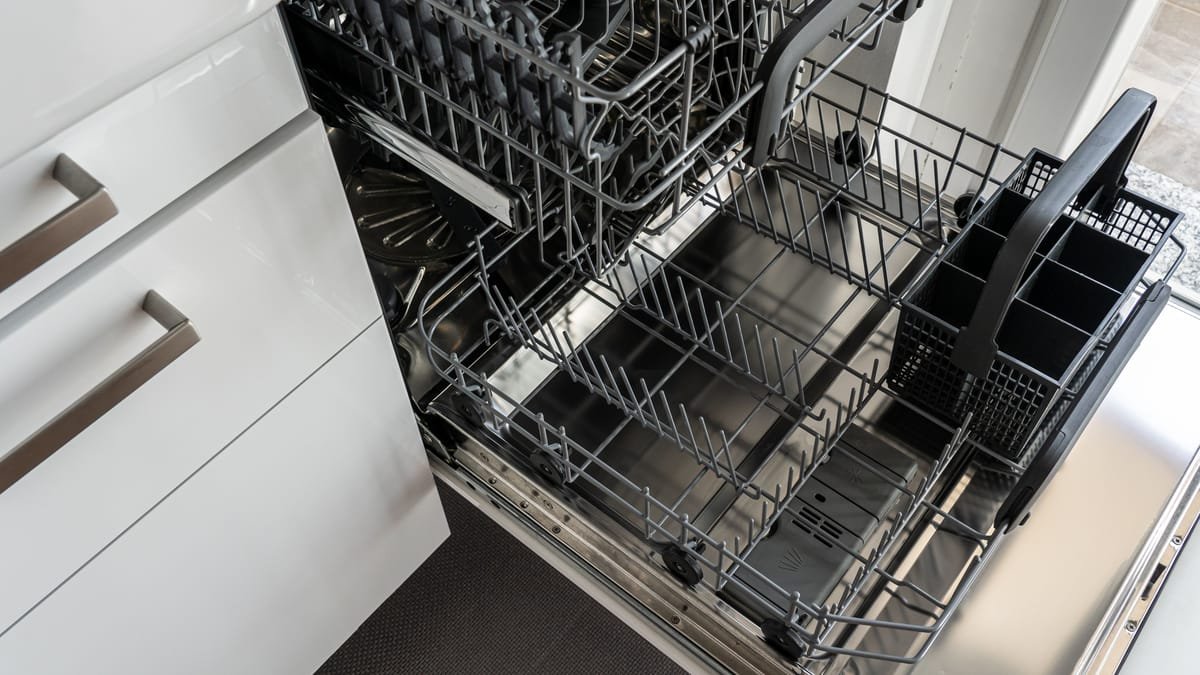
- Take out the bottom rack and the utensil basket.
- Remove any food, labels, toothpicks, bits of glass or seeds from the bottom of the tub and around the drain.
- If you see standing water, check the drain area for a blockage before going further.
Step 2: clean the filter
The filter is the single most important part to keep clean, since it catches the food your dishwasher washes off. LG warns that if the filter is neglected, it may generate an offensive odor.
- Remove it. LG says to pull out the lower basket and remove the filter, and that on some models you turn the filter counterclockwise and gently pull up. Your layout may differ, so check the manual.
- Remove the debris and rinse the filter under running water. A soft brush or old toothbrush helps with stubborn bits.
- Don't use excessive force. LG specifically says not to wash the filter with excessive force.
- Put it back correctly. LG notes that improper installation prevents the filter from collecting debris and lowers washing performance, so reverse the removal steps and make sure it locks in.
Step 3: wash the spray arms
The spray arms push water onto your dishes through small holes called jets. Mineral deposits and food bits clog them, and then dishes come out unevenly clean.
- Remove the middle and lower arms. Samsung says to take them off, so look for a nut or release tabs, and follow your manual.
- Wash them in warm, soapy water and clean the jets with a soft brush, as Samsung advises.
- Poke out any stubborn clog with a toothpick, then rinse.
- Reattach them and spin each arm by hand to make sure it turns freely.
Step 4: clean the dispenser, door and seal
- Dispenser: Samsung notes that leftover detergent in the dispenser can clog it, and says to clean the dispenser and its spring with a small brush.
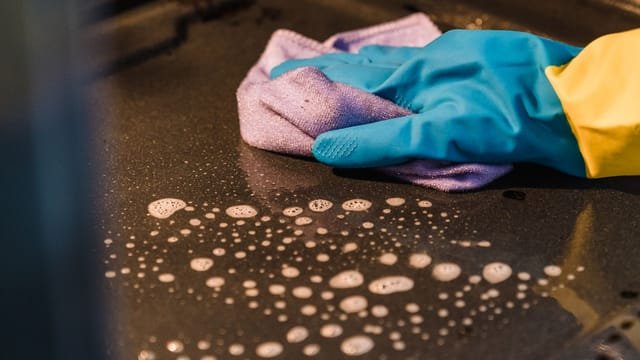
- Door edges and rubber seal: wipe with a damp cloth and a little dish soap, and use a soft toothbrush for the crevices where grime collects. Be gentle with the rubber so you don't damage it.
- Walls and racks: wipe down the tub walls and the racks. Rust spots on racks or chipped coating are a sign to replace the rack.
Step 5: run an empty cleaning cycle
After the parts are clean, a cycle with vinegar or citric acid helps dissolve film and deodorize the tub. The manufacturers give slightly different directions, which is a good reason to check your own manual first.
- Samsung: put 2 cups of white vinegar in the bottom of the empty dishwasher, close the door and run a full cleaning cycle. If that doesn't help, use 1/4 cup (60 ml) of citric acid crystals instead.
- LG: put about 1 oz of vinegar in a small bowl, set the bowl in the lower basket and run the Standard cycle. LG says the vinegar can clean and deodorize the inside of the dishwasher.
Run the cycle with no dishes in the machine, and use only one cleaner at a time. Never mix cleaning products. Bleach and vinegar together release toxic chlorine gas, and the CDC has documented cases of illness from mixing household cleaners. Check your manual before using bleach in a dishwasher at all.
If you have hard water or a white film
Cloudy glasses and a chalky film often come from hard water. Samsung recommends refilling the water softener with dishwasher salt and adjusting the regeneration level as described in the user manual, if your machine has one. Using rinse aid also improves washing and drying, per Samsung, and the citric acid cycle in Step 5 helps dissolve mineral buildup.
Loading mistakes that make it dirty again
- Blocking the spray arm. Samsung says that if a plate touches the nozzle and stops it from turning, the wash suffers, so load dishes so the arms can spin.
- Too much or too little detergent. Use the right type and amount for your water hardness.
- Not scraping. You don't have to pre-rinse, but large scraps belong in the trash, not the filter.
- Overloading. Water and detergent can't reach every surface in a crowded rack.
Drainage and water supply
If water stays in the bottom after a cycle, check the filter and the drain first. Samsung also advises opening the water supply valve fully, and says a high drain hose loop helps prevent dirty water from flowing back into the dishwasher. If those are fine and the machine still won't drain, it's time for a technician.
Clean the outside too
Wipe the door, the handle and the control panel with a damp microfiber cloth, since fingerprints and splashes collect there. Dry stainless steel surfaces by wiping along the grain, and check your manual before using any special cleaner on the control panel.
Keep it clean longer
- Scrape plates and rinse off heavy grease and sauces before loading.
- Leave the door slightly open after a cycle so the tub dries and doesn't stay damp and musty.
- Check the filter each month and run a cleaning cycle every few months.
- Use the right amount of detergent and rinse aid for your water.
When to call a technician
If the dishwasher still smells, leaks, doesn't drain or won't start after you've cleaned the filter, spray arms and drain area, the problem may be a pump, a hose or a valve. A technician can find it. Our kitchen organization guide has more on keeping the kitchen's cleaning routines easy to follow.
Sources
- LG, Dishwasher: how to clean the filter
- Samsung, What should I do if the dishwasher does not clean well?
- CDC, MMWR report on chlorine and chloramine gas from mixing cleaning products
Frequently asked questions
How do I clean the inside of my dishwasher?
Remove the bottom rack and rinse the filter under running water, wash the spray arms and clear their jets, wipe the door edges and dispenser, then run an empty hot cycle with white vinegar. If vinegar doesn't solve the problem, Samsung suggests citric acid crystals instead. Follow your own manual for the exact steps.
How often should I clean my dishwasher filter?
LG gives no fixed schedule, but says regular filter cleaning improves washing performance and that a neglected filter can cause an offensive odor. A monthly check is a practical habit, and clean it right away if dishes come out gritty or the dishwasher smells.
Why does my dishwasher smell?
The usual cause is food trapped in the filter. LG says a neglected filter may produce an offensive odor. Clean the filter, the spray arms and the door edges, then run an empty cycle with vinegar or citric acid.
Can I use vinegar and bleach together in the dishwasher?
No. Never mix cleaning products. Bleach mixed with an acid such as vinegar releases toxic chlorine gas, as the CDC has documented for household cleaning products. Run one cleaner at a time, rinse thoroughly between them, and check your manual before using bleach in the dishwasher at all.
Why are my dishes still dirty after washing?
Samsung lists a dirty filter, clogged spray arm jets, dishes blocking the spray arm, the wrong amount of detergent and low water pressure as common causes. Clean the filter and spray arms, load so the arms can turn, and use the right detergent and rinse aid.
This site may earn a commission from products linked here, at no extra cost to you.