Quick answer
For heavy soil, use the self-clean cycle: take out the racks and everything else, wipe out loose spills, open a window or run the exhaust fan, run the cycle, then wipe out the ash once the oven has cooled. For light soil, wipe by hand with dish soap and water and rinse well. Don't use commercial oven cleaners in a self-clean oven, and wash the racks separately. This follows guidance from GE, Samsung, Bosch and Wolf, and your own manual comes first.
The oven is the one appliance most people avoid cleaning, because it is hot work and the products smell. But a dirty oven smokes when it heats, gives food an off smell and is harder to clean the longer you wait. The good news is that most ovens can clean themselves, and the manual method needs only soap, water and some patience. This guide covers both, plus racks, glass and the safety details that matter.
First, find out which kind of oven you have
- Self-clean (also called auto clean): locks the door and heats to a very high temperature to burn soil to ash. GE says up to 885°F.
- Steam clean: a separate cleaning function on some models. Samsung mentions it, along with self-clean, for cooked-on residue, so check your manual for the steps.
- Standard (manual) clean: no cleaning cycle, so you clean it by hand. GE says these were common on older ranges and are still offered on a few models.
The control panel or the owner's manual will tell you which one you have. If you've lost the manual, you can usually find it by searching the model number on the brand's support site.
What you need
- Dish soap, warm water and a few soft cloths or sponges
- A plastic scouring pad (no steel wool unless the manual allows it)
- Rubber gloves
- A non-abrasive cleaner for stubborn spots, such as the one GE names in its guidance, Bar Keepers Friend Liquid Soft Cleanser
- A bathtub or large sink for the racks
- A window you can open, or a working exhaust fan
Method 1: the self-clean cycle, step by step
Self-clean is the easiest way to deal with heavy, baked-on soil. These steps follow GE's support guidance, with details from Samsung and Wolf.
- Empty the oven completely. GE says to remove everything, including probes, foil, silicone mats and stored pans. It doesn't recommend using the oven for storage or lining the racks or floor with foil or silicone mats, because damage can occur if they're left in during self-clean. Don't remove the light bulb or its cover.
- Take out the racks. GE says to remove them unless they're labeled self-clean or never-scrub racks, which are enameled and dark. Wolf says to remove all racks and rack guides, because they discolor. See the racks section below.
- Wipe out loose spills. GE says any spillover, such as juices or liquid grease that isn't baked on, should be wiped out with a wet cloth first. Wolf says wiping out the oven cavity reduces smoke and odors. Clean the inside of the door and the window too, but don't use cleaning products for this step.
- Ventilate the kitchen. Samsung says to always open a window, turn on a ventilation fan, or both during self-clean.
- Start the cycle. Follow your manual for the time setting. Wolf notes that the door locks as soon as the cycle starts and unlocks during the cool-down once the temperature is safe. For double ovens, GE and Wolf say you can't self-clean both at once, and GE adds you can't bake in one while cleaning the other.
- Let it cool. GE says cooling can take 30 to 90 minutes, and the lock light may stay on during that time. The fan may keep running until the oven has cooled.
- Wipe out the ash. White ash is normal. GE says it appears as a light film or a darker, heavier ash depending on how much soil there was, and that a mix of water and vinegar on a sponge or cloth removes it.
Smoke, odors and safety during self-clean
- A little smoke is normal. GE says soil is being burned off and turned to ash, and Samsung says it is normal for smoke and unusual odors to occur during self-cleaning.
- Heavy smoke means too much soil. GE says it is usually caused by excessive grease or soil, or an item left inside. Open the windows and use the exhaust fan.
- If there are flames, GE says to switch the oven off, let it cool for at least one hour, correct the cause and start again.
- Birds. Samsung warns that some birds are extremely sensitive to the fumes released by self-cleaning ovens, and says to keep birds in well-ventilated rooms, far from the range. If you have birds, check your manual and consider hand cleaning instead.
- Stay nearby. Don't run the cycle when you're about to leave the house, so you can react if something goes wrong.
Method 2: clean the oven by hand
Hand cleaning works for light soil, for ovens with no cleaning cycle and for anyone who prefers to avoid the heat and fumes. GE says hand cleaning a self-clean oven is perfectly acceptable, and gives this approach:
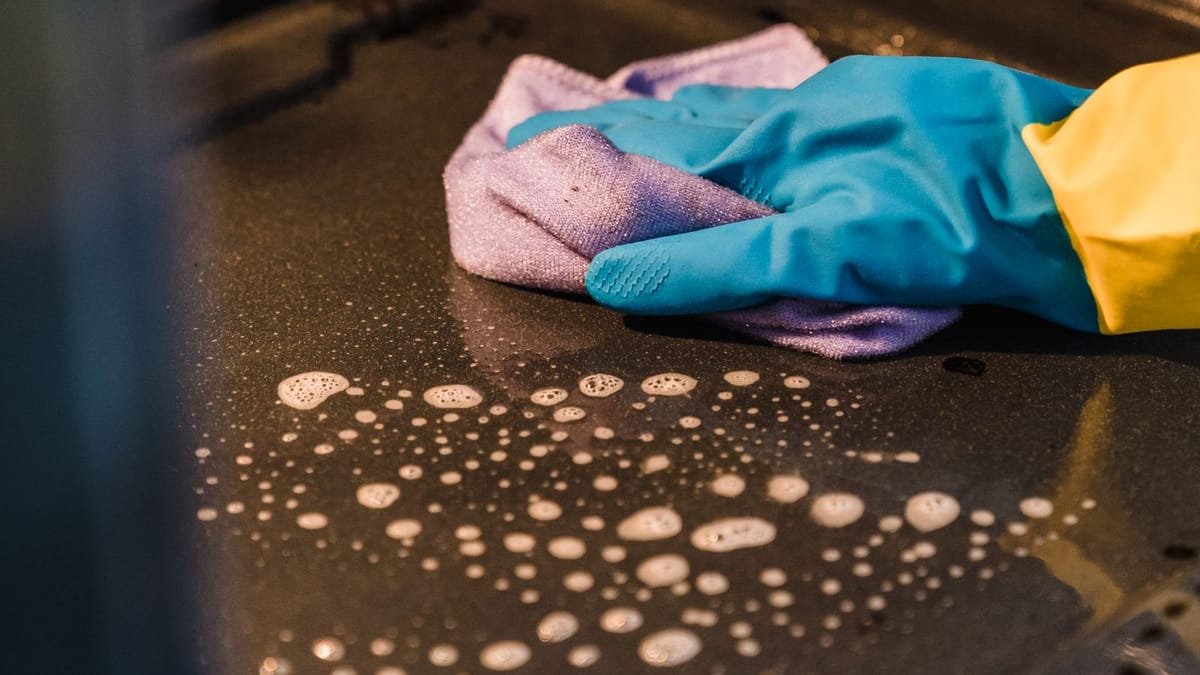
- Start with soap and water. Wipe out minimal amounts of soil with a dishwashing liquid and water solution, using a cloth, sponge or plastic pad. For heavy soil, GE recommends the self-clean cycle instead.
- Scour lightly if needed. GE says a scouring pad (steel wool or plastic) may be used if you prefer to hand clean only, rubbing soiled areas lightly so you don't scratch the liner. Don't use scouring powders.
- Loosen burned-on grease with ammonia, if you choose. GE's method is 1/2 cup of household ammonia in a shallow glass or pottery container, placed in a cold oven overnight, with the oven off while the ammonia is inside. The fumes help loosen burned-on grease and food. Open a window, wear gloves, and never mix ammonia with bleach or any other cleaner, since that releases toxic gas, as the CDC has documented.
- Use a non-abrasive cleaner on stubborn stains. GE names a product such as Bar Keepers Friend Liquid Soft Cleanser, applied with a sponge or cloth.
- Rinse very well. GE warns that soap residue left on the liner can cause staining or discoloration when the self-clean cycle is run later.
- Handle the door with care. GE says the same procedure can be used on the inside of the oven door, but to avoid rubbing or cleaning the door gasket.
Oven cleaner: what the makers say
Spray oven cleaners are the most common shortcut, but GE says not to clean a self-clean oven with commercial oven cleaners, even those designed for use with self-clean ovens. Its reason is that continuous use of chemical cleaners on a self-clean liner will cause etching and discoloration, and eventually the oven won't clean effectively when you run the cycle. For older standard-clean ovens, GE doesn't recommend commercial cleaners either, but if you choose one, it says to pick one made for standard-clean ovens, follow the label, wear rubber gloves, and wipe off any cleaner that gets on the thermostat bulb, the small bare wire inside the oven near the top.
Oven racks
Racks are the part people often get wrong. Samsung says leaving racks in during self-clean is not recommended, since the heat can warp them, discolor them and scratch the porcelain rack guides. Bosch says not to leave racks in during self-cleaning, and that racks cleaned in the oven lose their shiny finish and may not glide smoothly. GE adds that shiny or silver racks put through the cycle will discolor and may warp slightly, making them hard to pull in and out.
To clean racks instead:
- Remove the racks and soak them in soapy water for a few hours or overnight, as Samsung suggests.
- Scrub gently with a non-abrasive pad or soft brush. Bosch says hot sudsy water works, and a soap-filled steel wool pad can be used on stubborn dirt.
- Rinse well and dry the racks completely before putting them back.
If your racks have already lost their glide, Bosch says to wipe the rack edges with a small amount of vegetable oil, then wipe off the excess.
Spills and smoke during normal cooking
If your oven smokes or smells when you cook, Samsung says to open a window or turn on a ventilation fan right away, then check the oven for spills that weren't cleaned up. A spill that burns can give off smoke or an odor, and cleaning it up resolves the problem. For residue that is cooked on, Samsung says to use the Self Clean or Steam Clean function. If the odor or smoke continues when the oven is completely clean, Samsung says to request service.
How often to clean an oven
GE has no specific recommendation for how often to run a self-clean cycle, and says use and soil buildup decide when you need to clean. It says most owners self-clean their ranges two or three times a year, which is enough for typical use, and that very frequent self-cleaning, perhaps more than once a month, could shorten the life of the range through extra wear on components and controls. Between cycles, wipe up spills once the oven has cooled. For standard-clean ovens, GE says frequent wiping with dish soap and water, especially after cooking meat, prolongs the time between major cleanings.
Mistakes to avoid
- Leaving racks, foil, silicone mats or pans in during self-clean
- Using commercial oven cleaners in a self-clean oven
- Using scouring powders, or scrubbing hard on the liner
- Leaving soap residue behind, which can stain when self-clean runs
- Running the cycle without ventilation
- Starting self-clean with heavy, wet grease on the floor of the oven
- Mixing ammonia with bleach or other cleaners
- Rubbing or cleaning the door gasket
When to call for service
Call for service if the oven won't enter self-clean mode, the door won't unlock after cooling, there is smoke or odor from a clean oven, or you see damage to the door, gasket or liner. For your specific model, the owner's manual and the brand's support site are the authority. For the rest of the kitchen, our guides to cleaning a dishwasher and organizing the kitchen cover the other routines.
Sources
- GE Appliances, Range & Wall Oven: Tips for Self Clean
- GE Appliances, Range & Wall Oven: What to Remove Before Self-Cleaning
- GE Appliances, Range & Wall Oven: Manually Cleaning a Self Clean Oven
- GE Appliances, Range & Wall Oven: Self Clean Oven Frequency of Use
- GE Appliances, Range: Cleaning a Manual or Standard Clean Oven
- Samsung, Should you leave oven racks in during the self-clean cycle?
- Samsung, There is smoke or an odor coming from Samsung oven
- Bosch, How to clean oven racks
- Wolf, Oven Self-Clean Feature
- CDC, MMWR report on chlorine and chloramine gas from mixing cleaning products
Frequently asked questions
What is the easiest way to clean an oven?
If your oven has a self-clean cycle, use it for heavy soil. GE says the cycle reaches up to 885°F and turns soil into ash. Remove the racks and everything else from the oven, wipe out loose spills, run the cycle with a window open or the exhaust fan on, and wipe out the ash once the oven has cooled, which GE says can take 30 to 90 minutes.
Can I use oven cleaner in a self-cleaning oven?
GE says not to. Its guidance is not to clean a self-clean oven with commercial oven cleaners, even those made for self-clean ovens, because continuous use of chemical cleaners can etch and discolor the liner and eventually stop the oven from cleaning effectively. Hand clean light soil with dish soap and water instead.
Should I leave the oven racks in during self-clean?
Usually not. Samsung, Bosch and Wolf say to remove the racks, and GE says to remove them unless they are labeled self-clean or never-scrub racks, which are enameled and dark in color. Shiny or silver racks left in can discolor, may warp slightly and can be hard to slide afterward.
How often should I self-clean my oven?
GE has no set recommendation, but says most owners self-clean two or three times a year, which is enough for typical use. It adds that running the cycle more than about once a month could shorten the life of the range through extra wear on components and controls.
Why is my oven smoking during self-clean?
A small amount of smoke is normal, since soil is being burned off, according to GE and Samsung. Heavy smoke usually means too much grease or soil, or an item left inside. Open a window or run the exhaust fan. If flames appear, GE says to switch the oven off, let it cool for at least an hour, fix the cause and start again.
Is the self-clean cycle safe for pet birds?
Samsung warns that some birds are extremely sensitive to the fumes released by self-cleaning ovens, and says to keep birds in well-ventilated rooms far from the range. If you have birds, check your oven's manual and consider hand cleaning instead.
This site may earn a commission from products linked here, at no extra cost to you.