Quick answer
Spread the work over two weeks. Week one: the slow jobs (oven, laundry and bedding, upholstery, decluttering). Week two: guest bathroom, guest bed, entryway and fridge space. The last two days: kitchen, floors, fresh towels and trash. Then keep the tree watered and 3 feet from heat, candles 12 inches from anything that burns, and leftovers in the fridge within 2 hours.
Most holiday cleaning goes wrong for one reason: everything is left for the day before. The oven needs hours, the guest bed needs clean sheets and the bathroom needs more than a quick wipe. This checklist splits the work into short windows, starts with the jobs that take the longest, and ends with a 30-minute reset for the day itself. Pick the rooms that matter for your guests and skip the rest. Nobody inspects the linen closet.
Before you start: declutter first, clean second
Wiping a clear surface takes seconds, and cleaning around piles takes minutes. Before you touch a cloth, do one pass through the rooms guests will see and carry out what does not belong there.
- Set a laundry basket by the door and walk the main rooms, dropping in anything that lives somewhere else.
- Clear the kitchen counters down to the things you use every day.
- Empty the entryway of extra shoes, bags and old mail so there is room for coats.
- Move one bag to the donation pile for every room. It also frees space for gifts that will arrive.
If clutter is the real problem, our guides to living room organization, kitchen organization and bedroom organization give each room a home for its things.
Two weeks before: the slow jobs
These are the tasks that need time to run, dry or air out. Do them now and they are finished.
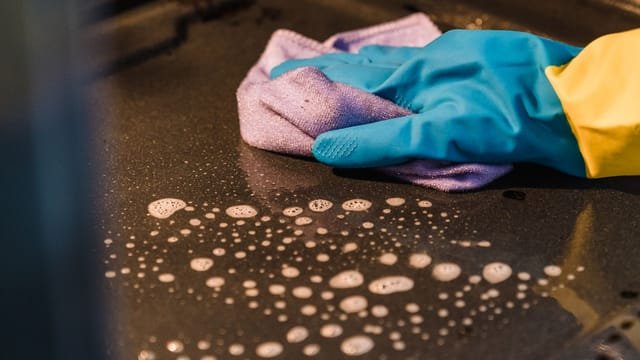
- The oven. A clean oven does not smoke when you roast. If yours has a self-clean cycle, run it this week and not the night before, since the cooling alone can take up to 90 minutes. Our oven guide covers the self-clean steps, hand cleaning and racks.
- The dishwasher. A full holiday means a full load every night. A quick filter and spray arm check, as in our dishwasher guide, keeps the dishes clean when it counts.
- The washer and dryer. You will do a lot of towels and sheets. Run a cleaning cycle on the washer and clear the lint trap and vent, using the washing machine and dryer guides. A clogged dryer is slow and a fire risk.
- Upholstery. Check the care tag on the sofa and spot-treat visible stains by fabric code. Our couch guide explains the W, S, WS and X codes.
- Mattress and pillows. If a guest is sleeping over, air out and vacuum the mattress and wash or replace the pillows now, so they have time to dry fully.
- Holiday decor. Test every light strand and read the safety section below before you put anything up.
One week before: guest areas
The guest bathroom
- Descale the shower head and run through the shower: glass, soap scum and drain.
- Check grout for mold and discoloration and deal with it before it is the first thing a guest notices.
- Clean the toilet, sink and mirror, and replace the toilet paper with a full roll plus a spare in sight.
- Set out a hand towel, a bath towel, a new soap and an empty trash can with a fresh liner.
- Clear the vanity. Our bathroom organization guide has a quick way to give a guest an empty shelf or drawer.
The guest bed
- Wash the sheets, mattress protector and blankets, and dry them fully. Make the bed once the room has been vacuumed.
- Leave an empty hanger rail or a few hangers, a free drawer or a luggage spot, a phone charger and a lamp that works.
- Keep a spare blanket folded within reach instead of making a guest hunt for one. If it is a weighted blanket, wash it now so it has time to dry.
The entryway
- Wipe the door handle, light switches and the inside of the door, because every guest touches them first.
- Shake out the mat and vacuum or mop the floor right inside the door.
- Clear a closet rail or a row of hooks for coats, and set a tray or mat for wet boots.
The fridge
A packed fridge is the quiet cause of most holiday food problems. Throw out expired items, wipe the shelves and clear room for the food you will cook and the leftovers you will keep. Food safety guidance from the USDA relies on getting cooked food cold quickly, and that needs space (more on this below).
Two days before: the final pass
Do these jobs as late as you can, because they are the ones that get dirty again.
- Dust from the top down. Shelves, frames, the TV and the tops of cabinets first, and floors last. Our TV screen guide shows how to clean it without streaks.
- Clean the kitchen surfaces. Counters, the sink, the stovetop, the microwave handle and the cabinet fronts around the stove.
- Vacuum and mop. Hardwood floors want a dry-first routine: sweep or vacuum first, then follow the floor maker's advice for any damp mopping.
- Wash the bathroom surfaces again. A fast wipe of the sink, mirror and toilet after the week-one deep clean.
- Take out the trash and recycling. Start the holiday with empty bins and spare bags in the cupboard.
- Set out the linens. Fresh kitchen towels, hand towels and a dish cloth in the kitchen, so you are not doing laundry in the middle of the party.
The day of: a 30-minute reset
- 10 minutes: do one last sweep of every guest-facing room and put out anything that has wandered back.
- 5 minutes: wipe the bathroom sink and toilet seat, and empty the trash.
- 5 minutes: clear the kitchen counters and load the dishwasher.
- 5 minutes: wipe the door handle and check the entryway.
- 5 minutes: light the candles, if you use them (see the rules below) and turn on the music.
Holiday decor safety: tree, lights and candles
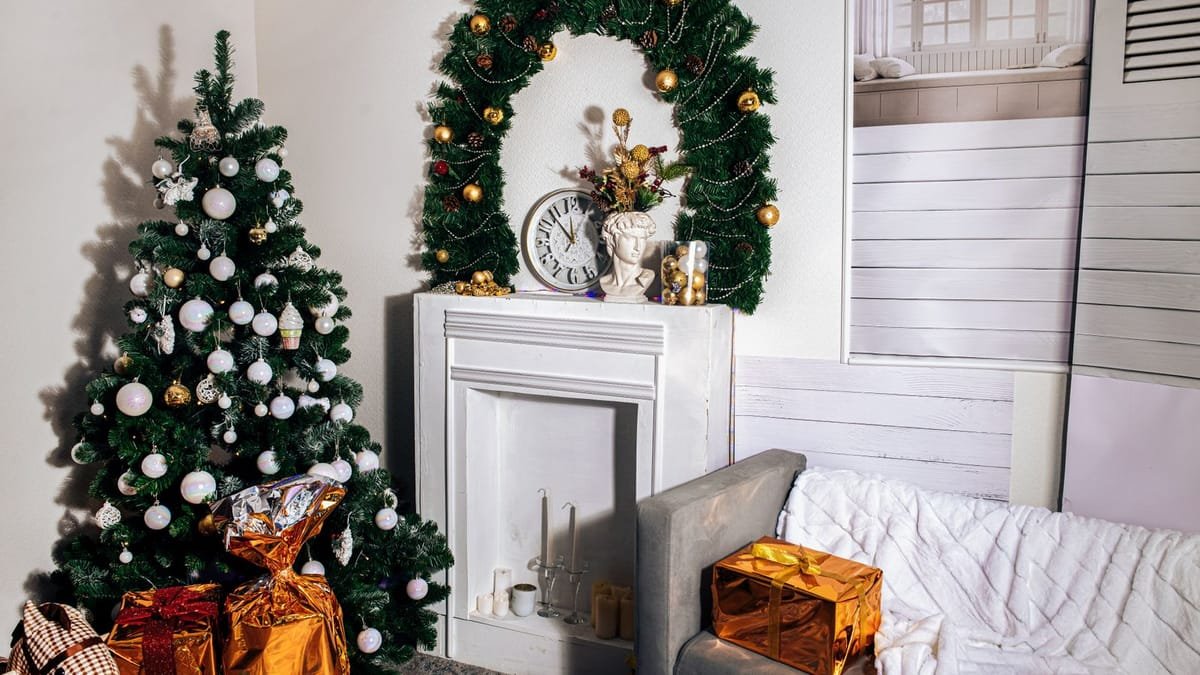
Decorations make the house festive, and the U.S. Fire Administration (USFA) points out that these same decorations can raise your chances of a home fire. Its guidance for the season is clear and short:
- Water the tree every day. USFA says a dry Christmas tree can burn very hot and very fast. Our guide to watering a Christmas tree covers the fresh cut, the stand and how much water to expect.
- Keep the tree 3 feet from heat. That means at least 3 feet from fireplaces, radiators, space heaters, candles or heat vents, and it should not block an exit.
- Inspect your lights each year. Throw away strands with frayed or pinched wires, and read the manufacturer's instructions for how many strands can be connected together. USFA cites NFPA data that almost one-third of home Christmas tree fires are caused by electrical problems.
- Keep candles 12 inches from anything that burns. Use stable holders and place them where they can't be knocked over, or consider battery-operated flameless candles.
- Get rid of the tree after Christmas, or when it is dry.
Food, leftovers and the fridge
The USDA Food Safety and Inspection Service (FSIS) says that cooking food to a safe temperature and leaving it out at an unsafe temperature are the two main causes of foodborne illness. For a holiday table, a few rules cover most of it:
- The 2-hour rule. Bacteria grow quickly between 40°F and 140°F. Refrigerate leftovers within 2 hours of cooking, or of taking food out of a warming appliance, and throw away perishable food left out longer than 2 hours (1 hour if it is above 90°F).
- Keep hot food hot and cold food cold. FSIS says to keep hot food at 140°F or warmer and cold food at 40°F or below. At a buffet, use chafing dishes, slow cookers or warming trays for hot food, and nest cold dishes in ice or use small trays and replace them often.
- Cool food fast. Divide large amounts into shallow containers, and cut a turkey or roast into smaller pieces before refrigerating. Hot food can go straight into the fridge.
- Wrap it well. Cover or seal leftovers in airtight packaging so they stay moist and don't pick up fridge smells.
- Know the clock. FSIS says leftovers keep for 3 to 4 days in the refrigerator, or 3 to 4 months frozen. Reheat to 165°F, and bring sauces, soups and gravies to a rolling boil.
After the guests leave
- Strip the guest bed and start the laundry the same day, before the sheets sit damp in a basket.
- Run the dishwasher one more time and wipe the counters, stovetop and fridge shelves.
- Empty every trash can and wipe the lids.
- Vacuum or sweep the floors where people walked and sat.
- Check the tree stand water and plan the tree's removal, rather than letting it dry out in the corner.
Mistakes to avoid
- Leaving the oven for the day before, when cooling and airing take longer than expected
- Putting up the tree next to a heat vent or fireplace, or skipping the water
- Using light strands with frayed wires, or plugging in more strands than the maker allows
- Leaving cooked food on the table through the whole evening
- Filling the fridge so full that leftovers can't cool quickly
- Deep cleaning the guest room but forgetting a free drawer, a hanger and a charger
- Starting with the floors and finishing with the dusting, which sends dust back down
Sources
The safety numbers in this guide come from U.S. government pages. The room-by-room plan itself is our own suggestion, based on the individual cleaning guides linked above, and is not an official standard.
- U.S. Fire Administration, Holiday Fire Safety
- USDA Food Safety and Inspection Service, Leftovers and Food Safety
Frequently asked questions
How far ahead should I start holiday cleaning?
Two weeks is a comfortable runway. Use the first week for the slow jobs, such as the oven, bedding, upholstery and decluttering. Use the second week for the guest room, the guest bathroom and the entryway. Keep the last two days for kitchen, floors and fresh towels, so nothing gets dusty again before people arrive.
What should I clean first before guests arrive?
Start with the spaces guests will actually see and use: the entryway, the guest bathroom, the living area and the kitchen. Then add the guest bed if someone is staying over. Declutter before you clean, because it is much faster to wipe a clear surface than to clean around piles.
How long can holiday food sit out?
The USDA Food Safety and Inspection Service says to refrigerate leftovers within 2 hours of cooking or of taking food out of a warming appliance, and to throw away perishable food left at room temperature for more than 2 hours, or 1 hour if it is above 90°F.
How far should a Christmas tree be from heat sources?
The U.S. Fire Administration says to keep a tree at least 3 feet away from heat sources like fireplaces, radiators, space heaters, candles or heat vents, to water it every day, and not to let it block an exit.
How long do holiday leftovers last?
The USDA says leftovers can be kept in the refrigerator for 3 to 4 days, or frozen for 3 to 4 months for best quality. Reheat them to 165°F as measured with a food thermometer.
This site may earn a commission from products linked here, at no extra cost to you.