Quick answer
Spray full-strength white vinegar on the tiles and glass, wait 15 to 20 minutes, then scrub and rinse. Soak the showerhead overnight in vinegar, and clean black mold in the caulk with 3% hydrogen peroxide. Squeegee the glass after each shower to slow the buildup.
The shower is the part of the bathroom that gets dirty fastest, and the part we clean least. A thin film of soap and hard water builds up a little more every week until one day the glass looks cloudy no matter how hard you scrub. The good news is that most of it comes off with ingredients you already have.
What you need
- White vinegar (about 2 cups)
- 3% hydrogen peroxide (for the caulk)
- Baking soda
- A non-scratch sponge and an old toothbrush
- A squeegee (optional, but it makes the biggest difference)
- A plastic bag and a rubber band (for the showerhead)
Step by step: the tiles and the walls
- Spray the walls with vinegar. Use full-strength white vinegar on tiles, grout lines and the glass. Soap scum is alkaline, so the acid in vinegar breaks it down.
- Let it sit for 15 to 20 minutes. Don't let it dry out. If the walls dry, spray again.
- Scrub with a non-scratch sponge. Work from the top down so the loosened grime rinses off the lower tiles, not onto clean ones.
- Rinse with warm water. Dry the surfaces with a towel to see what's left. Thick patches usually need a second round.
How to clean cloudy shower glass
Cloudy glass is hard water, which vinegar dissolves well. Soak a cloth in vinegar, wrap it around the glass, and leave it for 15 minutes. Then rub with a sponge and rinse. For the tracks along the bottom, use an old toothbrush dipped in baking soda and a little vinegar, since grime and mineral deposits collect there.
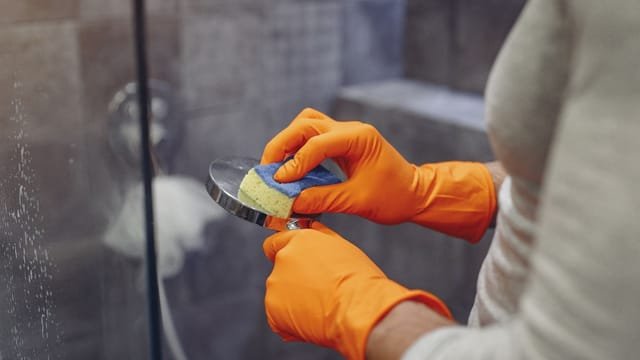
How to clean the showerhead
- Fill a plastic bag with white vinegar.
- Tie the bag around the showerhead with a rubber band so the nozzles are fully submerged.
- Leave it overnight.
- Remove the bag, run the water for a minute, and scrub the nozzles with an old toothbrush to clear what the vinegar loosened.
How to remove black mold from the caulk
The black spots in the corners and along the caulk line are mold. Spray 3% hydrogen peroxide on them, let it sit for 10 minutes, and scrub with a stiff brush. Repeat if needed. If the mold keeps coming back, or the caulk is cracked or peeling, the caulk should be replaced. Mold that grows behind the tiles is a sign of water getting into the wall, and that's a job for a professional.
Safety first
Never mix bleach and vinegar in the same spray or cycle. The combination releases chlorine gas. Use one product, rinse, and then use the other if you need it. Open the bathroom window or run the fan while you clean.
The habit that keeps it clean for longer
Squeegee the glass and wipe the walls after each shower. It takes less than a minute and stops most of the soap scum before it can set. Run the exhaust fan for 15 minutes after you're done, so the walls dry instead of staying damp, since moisture is what feeds mold.
Sources
- EPA, Mold Cleanup in Your Home
- CDC, MMWR report on chlorine and chloramine gas from mixing cleaning products
Frequently asked questions
What is the best way to remove soap scum from a shower?
Soap scum is alkaline, so an acidic cleaner works best. Spray full-strength white vinegar on the tiles and glass, let it sit for 15 to 20 minutes, then scrub with a non-scratch sponge and rinse. For thick buildup, repeat once before scrubbing harder.
Can I mix bleach and vinegar to clean a shower?
No. Mixing bleach and vinegar releases chlorine gas, which is dangerous to breathe. Use one product, rinse the surface well, and only then use the other if you need it.
How do I clean a showerhead?
Fill a plastic bag with white vinegar, tie it around the showerhead so the nozzles are submerged, and leave it overnight. Remove the bag, run the water for a minute, and scrub the nozzles with an old toothbrush.
How do I get black mold out of shower caulk?
Spray 3% hydrogen peroxide on the caulk, let it sit for 10 minutes, then scrub with a stiff brush. Repeat if needed. If it keeps coming back or is behind the tiles, replace the caulk.
This site may earn a commission from products linked here, at no extra cost to you.