Quick answer
Clear everything out and toss what's expired or unused, keep only daily products on the counter in a tray, use drawer dividers and bins under the sink, move medicine out of the damp bathroom, give towels hooks or an open shelf, and store toothbrushes upright to air dry. Finish with a five-minute reset so it stays that way.
A bathroom collects products faster than almost any room: half-used shampoos, samples, three kinds of lotion, a drawer of hair ties. It's also tiny, damp and shared, so there's little room for mistakes. The fix is to edit hard, give each category a fixed spot, and use the vertical space and doors that most bathrooms ignore.
Start by emptying everything
Take everything out of the cabinets, drawers, shower and from under the sink and put it on a towel or the bed. It looks worse for ten minutes, but it's the only way to see what you actually own. Then sort into four piles:
- Use daily: toothbrush, face wash, deodorant, the products you reach for every morning.
- Use sometimes: hair masks, nail tools, a backup razor, first aid.
- Backups and bulk: extra toilet paper, spare soap, a second toothpaste.
- Toss or donate: empty bottles, dried-out products, samples you won't use, duplicates, broken tools.
Be ruthless with the last pile. If you haven't touched a product in six months, it isn't earning its shelf space.
Zone the bathroom by activity
Group products by what you do with them, and store each group where that happens.
- Sink zone: toothbrush, toothpaste, face wash, soap, daily skincare.
- Getting-ready zone: hair tools, brushes, makeup, razors, styling products, ideally in a drawer or caddy near the mirror and an outlet.
- Shower zone: shampoo, conditioner, body wash, razor and a loofah or brush.
- Towel zone: clean towels near the shower, a hook or rack for used ones.
- Toilet zone: backup toilet paper, a brush, a small bin and cleaning spray.
- Supply zone: backups, first aid and cleaning products, in a cabinet or bin that's out of the way.
The vanity: one tray and a strict rule
Counters are the first thing you see and the easiest thing to clutter. Keep only what you use every day, and corral it.
- Put a tray on the counter for the daily items, such as a soap dispenser, a cup for toothbrushes if you use one, and a small dish for rings.
- Move everything else into the drawer, cabinet or caddy.
- Adopt a one-in, one-out rule: when you open a new product, the old empty one goes in the trash that day.
- Wipe the counter when you wipe the sink. With less on it, that takes a few seconds.
Toothbrushes and dental care
The American Dental Association recommends storing toothbrushes upright after use so they can air dry, and notes that a moist toothbrush kept in a closed container promotes microbial growth more than open air. It also says toothbrushes should not be shared and should be replaced about every three to four months, or sooner if the bristles are matted or frayed.
- Use an open holder, a wall-mounted rack or a cup that drains, rather than a closed cover.
- Keep each person's brush separated so the heads don't touch.
- Put a reminder on your phone, or note the date on a spare brush, so you remember to replace them.
Drawers: dividers for small things
Bathroom drawers turn into junk drawers quickly, because the items are small and numerous. Dividers solve most of it.
- Use shallow trays or dividers so each category has a fixed slot: makeup, skincare, dental, hair accessories.
- Store hair tools in a heat-safe bin or a holder inside the cabinet door, once they've cooled and are unplugged and dry.
- Hair ties and clips go in a small dish or a divided compartment, not loose.
- Keep the first drawer for the daily things and leave the bottom drawer for the rarely used.
Under the sink: bins, pull-outs and a caddy
The cabinet under the sink is awkward, because the pipes take up the middle. Work around them.
- Use bins that fit on either side of the pipes, sorted by category such as first aid, hair, backups and cleaning.
- A two-tier pull-out or a stackable organizer turns the height of the cabinet into useful storage.
- Keep a cleaning caddy with a spray, a cloth and a brush that you can carry to the toilet or the shower.
- Hang spray bottles from a tension rod across the cabinet so the floor stays free.
- Keep cleaning products on their own bin and out of the reach of children. Never mix them.
The medicine cabinet: a damp room is the wrong place
Most people keep medicine in the bathroom out of habit, but the FDA names a damp bathroom cabinet as an example of improper storage that can reduce a medicine's effectiveness. It says it is better to store medicine in a cool, dry place (and, if you use a kitchen cabinet, away from hot appliances and the sink), and that care should be taken to prevent access by children. A closet shelf or a dresser drawer in a bedroom are easy examples of a drier spot. Certain medicines need the refrigerator, so always read the label.
- Keep medicine in the original container with its label.
- Move it out of the bathroom to a dry, cool spot that children can't reach, and a lockable box if you have kids at home.
- Use the bathroom cabinet for things that tolerate humidity: bandages, tweezers, nail clippers, cotton rounds in a closed jar.
- Check expiration dates a couple of times a year and dispose of old medicine properly.
The shower: only what you used this week
A crowded shower is hard to clean and breeds soap scum, so keep the contents small.
- Use a caddy or shelf that drains, either hanging from the shower head or rod, or stuck to the tile, so water doesn't pool underneath.
- Keep only the bottles in use. Backups live in a cabinet.
- Switch to refillable pump bottles or a wall-mounted dispenser if your household uses a lot of the same product. It looks tidier and saves money.
- Hang the razor and loofah to dry, not on a wet shelf.
- Clear the caddy when you clean. Our shower cleaning guide goes through soap scum, glass and mold step by step.
Towels: hooks, bars and one open shelf
Towels take more room than anything else in a bathroom, so decide on a number and a place.
- Give each person a hook. Hooks dry towels faster than folding them over a bar, and everyone knows which one is theirs.
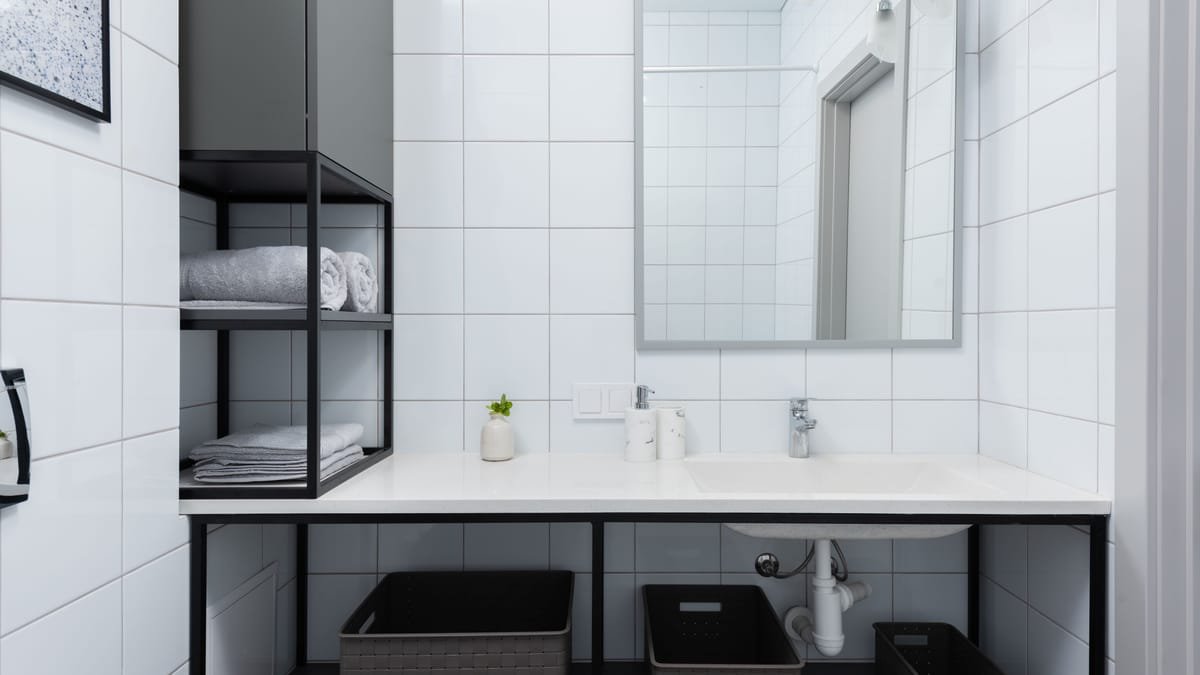
- Roll clean towels on an open shelf within reach of the shower, as in the photo above, or in a basket. Rolled towels take less shelf height and look tidy.
- Keep two bath towels per person in rotation, and store extra sets in a closet or the linen cabinet, not in the bathroom.
- Hang, don't pile. Wet towels in a heap stay damp and smell. Our grout guide covers what damp bathrooms do to tile if humidity lingers.
Around the toilet
A few small items belong here: a spare roll or two, a brush in a holder, a small covered bin and a cleaning spray. A shelf or a slim freestanding unit above or beside the toilet holds spare rolls and a basket without taking floor space. Keep decorative items to one or two, so the space stays easy to clean.
Small bathrooms and no-drill options for renters
- Over-the-door hooks and organizers use the back of the door, which is free real estate in most small bathrooms.
- Over-the-toilet shelves that stand on the floor need no wall mounting.
- A tension shower rod or a corner caddy adds shelves in the shower without drilling.
- Adhesive hooks and strips hold towels, a robe or a lightweight basket. Check the weight rating and let the adhesive cure first.
- A slim rolling cart fits in a gap beside the vanity and moves out for cleaning.
- Pedestal sink? Add a wall shelf or a small stool and a bin, since there is no cabinet under it.
Shared and kids' bathrooms
- One caddy per person that they carry in and out keeps personal products out of the shared space.
- A low hook and a step stool let children manage their own towel and toothbrush.
- Bath toys: store them in a mesh bag that hangs and drains, not in a closed bin where they stay wet.
- A labeled basket per child for hair things and bath products keeps the counter clear.
Budget ideas vs. worth splurging on
- Budget: a tray, mason jars for cotton and swabs, shoebox lids as drawer dividers, an over-the-door hook, a tension rod, adhesive hooks.
- Worth it: drawer dividers that fit, a pull-out or stackable organizer for under the sink, an over-the-toilet unit, good towel hooks, and a lockable box for medicine.
The five-minute bathroom reset
- Put products back in the tray or caddy and wipe the counter and sink.
- Hang the towels and check there's a clean one for tomorrow.
- Toss empty bottles, tissues and anything that doesn't belong.
- Squeegee the shower walls or run the fan for a while so moisture leaves the room.
- Check the toilet paper and the soap.
Every three months, go through the cabinets and under the sink for expired, empty or unused products, and give the drawers a quick wipe.
Sources
- U.S. Food and Drug Administration, Don't Be Tempted to Use Expired Medicines
- American Dental Association, Toothbrushes
Frequently asked questions
How do I organize a small bathroom with no storage?
Use the vertical space and the doors. Add an over-the-toilet shelf or a slim freestanding unit, hooks for towels, an over-the-door organizer, a caddy that hangs from the shower rod, and bins or a pull-out under the sink. Keep only the daily products on the counter and store backups elsewhere.
Should I keep medicine in the bathroom?
The FDA gives a damp bathroom cabinet as an example of improper storage that can make medicines less effective, and says it is better to store medicine in a cool, dry place and to prevent access by children. A closet shelf or a dresser drawer works better than the bathroom. Always read the label, since some medicines need the refrigerator.
How should I store my toothbrush?
The American Dental Association says to store toothbrushes upright after use and let them air dry, because a moist toothbrush in a closed container promotes microbial growth more than open air. Toothbrushes should not be shared and should be replaced about every three to four months, or sooner if the bristles are frayed.
How do I stop shower products from cluttering the shower?
Keep only what you used this week in the shower, in a caddy or on a shelf that drains. Move backups to a cabinet, switch to a wall-mounted dispenser or refill bottles for body wash and shampoo, and clear the caddy when you clean the shower.
How often should I declutter the bathroom?
Do a quick reset every day and check the cabinets, drawers and under the sink every three months for expired, empty or unused products. A deeper purge twice a year keeps products from piling up again.
This site may earn a commission from products linked here, at no extra cost to you.