Quick answer
Store decorations in a cool, dry interior space, such as a closet, and avoid attics and basements, where humidity and temperature swings cause damage. Pad glass ornaments with lightly crumpled tissue in a cardboard box nested inside a larger box or bin. Fix burned-out bulbs on an artificial tree, leave the lights on, and pack the sections in a bag sized to the tree without crushing the branches. Throw away light strands with frayed or pinched wires, and never put a real tree in the trash or the fireplace: use curbside pickup, a drop-off site or a mulching program instead.
Packing up the holidays is a chore, but it decides how much work next December is. The advice here comes from art conservation faculty at the University of Delaware, from Treetime, an artificial tree company, from the U.S. Fire Administration (USFA), and from the National Christmas Tree Association (NCTA). Some parts, like how to wind lights or label bins, have no official standard, so we mark them as our own suggestions.
Before you pack: pick the right place
Where the boxes sit matters as much as how you pack them. University of Delaware conservators say to store objects in a cool, dry, climate-controlled space away from direct sunlight or heat sources. They say interior closets are ideal and that attics and basements should be avoided, because humidity and temperature fluctuations can cause damage.
That is hard advice to follow if the attic is the only free space. Their fallback, for items you cannot keep in a climate-controlled spot, is to make a "microclimate" (see the ornament section below) with padding and nested boxes. If you are also getting the house ready for guests first, our holiday cleaning checklist is the place to start.
Step 1: Sort as you take things down
- Pull everything into one spot first. This is our suggestion: unpack the tree, the ornaments, the lights and the stockings onto one table or floor area, so you can see what you own.
- Make three piles: keep, donate, toss. Broken ornaments, tangled strands that no longer work and decorations you did not use this year are the easy ones to remove.
- Check for hazards. The Delaware faculty warn that objects made before 1940 with fake "snow" may contain asbestos, that antique icicles or tinsel may contain lead, and that old electrical wiring is a fire hazard. If you inherited old decorations, check before you display or pack them with everything else.
Step 2: Pack ornaments
- Clean before you pack. Gently wipe dust off glass with a microfiber cloth, watching for sharp bits that could snag it. Plain glass can be spot cleaned with water and a cotton swab. The conservators say never to try to clean hand-painted glass.
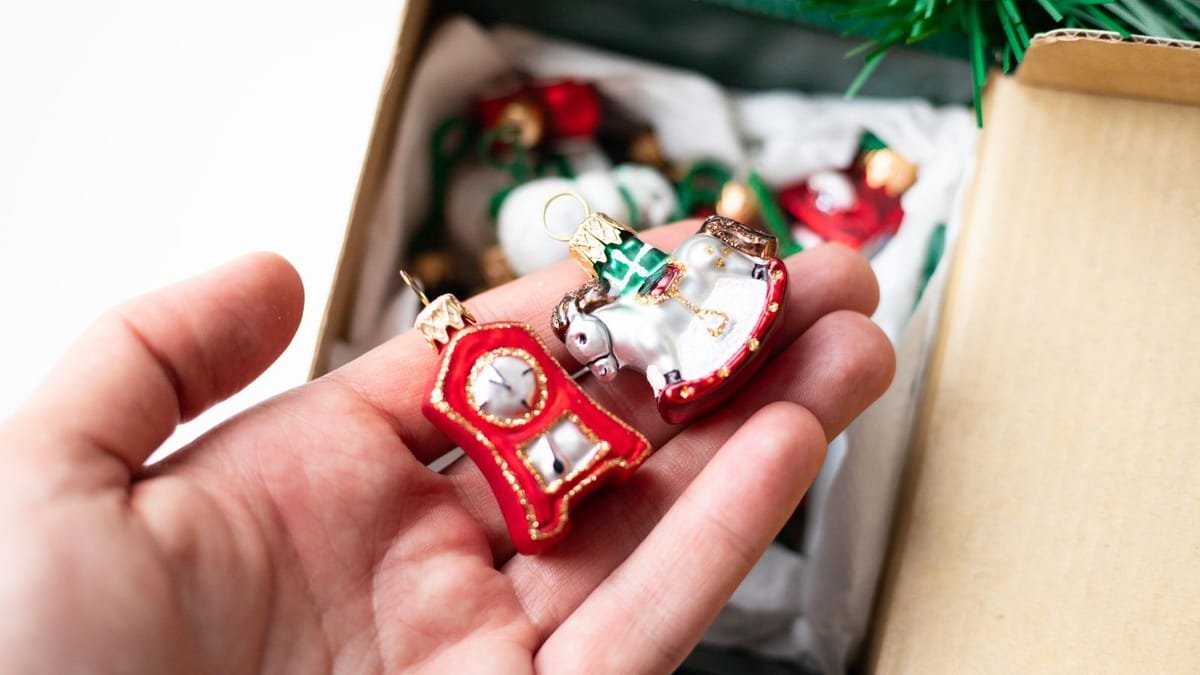
- Use the "microclimate" method. Pad each item with lightly crumpled tissue, place it in a cardboard box, and nest that box inside a larger box or a plastic bin. That is the Delaware recommendation when you cannot control the climate of the storage space.
- You do not need special containers. Assistant professor Madeline Hagerman says special ornament boxes are not necessary, because tissue and nested boxes are enough.
- Silver and metal. To prevent tarnish, Hagerman says to wrap silver in acid-free tissue or use Pacific Silver Cloth, a cloth with silver embedded in its fibers that tarnishes first. She also says tarnish forms a stable surface that does not keep corroding, and some people leave it.
- Natural decorations. Plant-based items such as corn husk figures attract pests. Wrap them in tissue and store them in a food-safe plastic bag.
- Label the box by room or theme. This is our suggestion: "Tree ornaments," "Mantel," "Table" and so on make next year's setup faster.
Step 3: Store stockings and textiles
- Do not machine wash. Hagerman says not to, especially wool. Soak items in cold water with gentle dish soap, do not squeeze or wring them out, and lay them flat to dry.
- Watch for pests. Wool attracts moths and other pests, so store it in a tightly sealed container away from windows.
- Mind the light. Synthetics like polyester resist pests, but light can fade many dyes, so keep them out of the sun.
Step 4: Check and store lights
- Test and sort now, not in December. The USFA says to inspect holiday lights each year before you put them up, and to throw away light strands with frayed or pinched wires. If you plug them in before you pack them, you will not find out next year.
- Keep strands from tangling. This is a practical tip, not a rule from the sources: wind each strand around a piece of cardboard or a spool and tuck the plug into the end.
- Label. A strip of tape on each strand ("front porch," "mantel") saves time later.
- Remove batteries from battery-powered decorations. This is another practical habit that the sources above do not cover.
Step 5: Take down and store an artificial tree
The steps below follow Treetime's storage guide, for Treetime trees. If your tree has its own manual, follow it first.
- Unplug and clear the area. Have the storage bag ready. Treetime says to put the open bag beside the tree before you remove sections.
- Fix the lights. Replace burned-out, broken, loose or missing bulbs before the tree goes into storage. Use the correct style and voltage for your tree, and keep spare bulbs with the tree. Treetime says to leave pre-installed lights on the tree.
- Find the sections. Treetime says trees 5 feet and under typically have two sections to remove, trees 6 to 8 feet usually have three, and trees 9 feet and taller have four to five.
- Remove the top and middle sections. Lay them down gently.
- Compress lightly. Give each section a gentle "hug" to guide the branches inward. Treetime warns not to crush or flatten the foliage, since over-compressing makes next year's shaping harder.
- Pack in order. Put the base in first, the middle section on the opposite side, and the top section in the remaining space.
- Add the extras. Put the stand, spare bulbs and hardware in the bag, then tighten the straps.
Bag or box? Treetime recommends a dedicated bag sized to the tree's height and fullness, and says a dedicated bag is usually easier to move. The original box can work temporarily but can be hard to close once the tree is shaped. Avoid forcing oversized sections into a bag that is too small.
Where to put it. Choose a clean, dry, protected spot. Treetime says to avoid damp areas whenever possible and not to stack heavy boxes on top of the bag. If you store it upright or on a shelf, support the bag so sections do not slide. Label the bag if you own more than one tree or several pieces of greenery.
Next year. Open the bag early and let each section relax before you shape it. Our guide to decorating a Christmas tree step by step picks up from there.
Step 6: Get rid of a real tree
A real tree is not stored, but it does need a plan, and a dry tree is a fire risk. The USFA says a dry Christmas tree can burn very hot and very fast, and to get rid of your tree after Christmas or when it is dry. (Our guide to watering a Christmas tree covers keeping it fresh until then.) The NCTA says not to throw a real tree in the trash, and lists these options:
- Curbside pickup. Many providers collect trees on regular pickup schedules in the two weeks after Christmas. There are often requirements for size, removing ornaments, flocking and so on.
- Drop-off centers. Most counties have free drop-off locations, and you can usually take up to two trees at no charge.
- Mulching programs. Ask your local public works department. Some chip the trees and make the mulch available for gardens.
- Nonprofit pickup. Some groups, such as certain Boy Scout troops, offer pickup for a small donation, often $5.
- Yard waste. Cut the tree to fit loosely into the yard waste container.
Before any of these, remove all decorations, hooks, garland and tinsel strands, and take off the stand. And the NCTA is clear on one point: never burn a Christmas tree in a fireplace or wood stove. Rules and dates vary by city, so check your local program.
What to do with wrapping supplies
Ribbons, bows and gift bags are worth keeping. We cover how to store them in our guide to wrapping a gift and setting up a wrapping station.
End-of-season checklist
- Pick a cool, dry interior spot, and avoid attics and basements if you can
- Pull everything into one place and sort into keep, donate and toss
- Wipe dust off ornaments and pack each one in tissue, in a box inside a larger box or bin
- Wash stockings by hand, dry them flat and seal wool in a container
- Check every light strand, throw away frayed ones, and wind the rest
- Replace burned-out bulbs on the artificial tree, keep spare bulbs in the bag, and pack the sections base, middle, top
- Label every bin and the tree bag
- Recycle the real tree, with decorations and stand removed, and never burn it
Mistakes to avoid
- Storing delicate ornaments in a hot attic or damp basement
- Packing ornaments loose, or stacking heavy boxes on the tree bag
- Crushing the tree's branches flat to make it fit
- Putting away light strands without checking for frayed or pinched wires
- Leaving a dry real tree in the house, or throwing it in the trash
- Burning a real tree in the fireplace
- Machine washing wool stockings
Sources
- University of Delaware, UDaily, "Preserving decor" (Dec. 18, 2025), with art conservation faculty Madeline Hagerman, Melissa Tedone and Debra Hess Norris
- Treetime, How to Store My Artificial Christmas Tree
- U.S. Fire Administration, Holiday Fire Safety
- National Christmas Tree Association, How to recycle
Frequently asked questions
Where is the best place to store Christmas decorations?
University of Delaware conservators say to store holiday decor in a cool, dry, climate-controlled space away from direct sunlight or heat sources. They say interior closets are ideal and to avoid attics and basements, because humidity and temperature fluctuations can cause damage.
How do I pack glass ornaments?
Delaware conservators suggest padding each ornament with lightly crumpled tissue, placing it in a cardboard box, and nesting that box inside a larger box or a plastic bin. Assistant professor Madeline Hagerman says special ornament containers are not necessary, because tissue and nested boxes are enough.
Should I leave the lights on my artificial tree when I store it?
Treetime, an artificial tree company, says to leave the lights on the tree. First replace any burned-out, broken, loose or missing bulbs, and keep spare bulbs with the tree. Strings of lights that are not part of the tree are separate; the U.S. Fire Administration says to inspect holiday lights each year before you put them up and to throw away strands with frayed or pinched wires.
Can I store my artificial tree in its original box?
Treetime says the original box can work temporarily but can be hard to close once the tree has been shaped, and recommends a dedicated bag sized for the tree's height and fullness. It also says not to force oversized sections into a bag that is too small, and not to stack heavy boxes on top of the bag.
What should I do with a real Christmas tree after the holidays?
The National Christmas Tree Association says not to throw it in the trash. Options include curbside pickup in the two weeks after Christmas, a free county drop-off, a mulching program, a nonprofit pickup, or cutting it to fit loosely in a yard waste container. Remove all decorations, hooks, garland, tinsel and the stand first, and never burn the tree in a fireplace or wood stove. The U.S. Fire Administration says to get rid of the tree after Christmas or when it is dry.
How do I wash and store stockings and other textiles?
Delaware conservator Madeline Hagerman says not to machine wash them, especially wool. Soak them in cold water with gentle dish soap, don't squeeze or wring them, and lay them flat to dry. Wool attracts moths and other pests, so store it in a tightly sealed container away from windows. Synthetics like polyester resist pests, but light can fade many dyes.
This site may earn a commission from products linked here, at no extra cost to you.